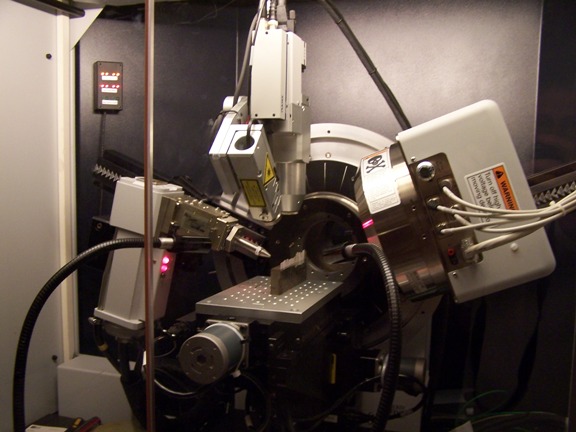
The WAXS D8 Discover system from Bruker works in transmission or reflection with an area detector and copper anode. The advantage of an area detector is the ability to see reflections from samples having not much of a scattering curve; we found the improvement to be about a factor of 100 vs. the normal receiving slit collimation and point detector. The disadvantage is a loss in resolution for narrow peaks (a characteristic not that relevant for polymers). Seen in the picture is about 10 polymer films mounted for successive measurement; this equipment comes with an xyz table that allows for multiple measurements. Transmission data on this instrument is good down to 5 degrees.
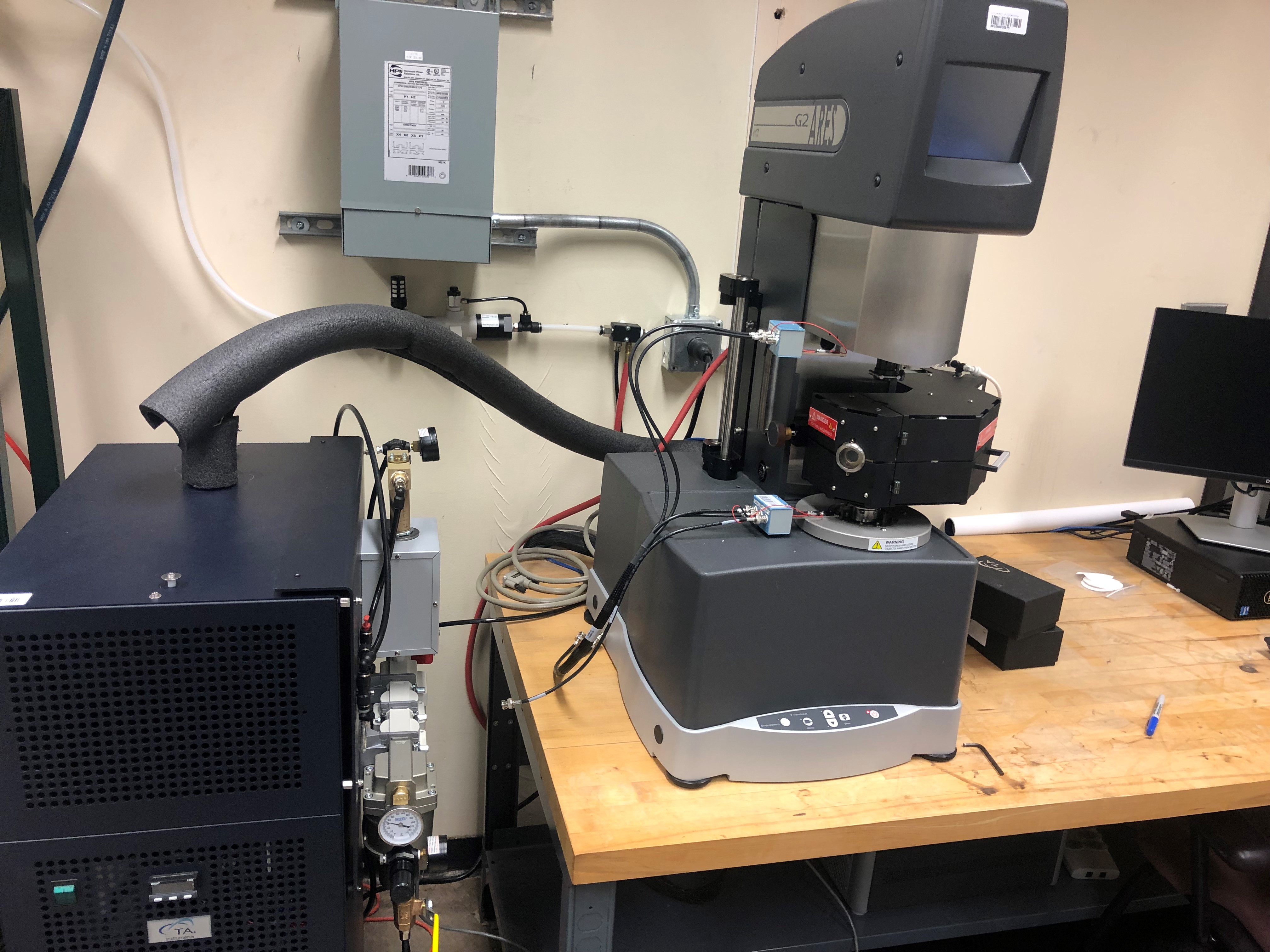
This ARES strain-controlled rheometer from TA Instruments is used by our group to measure the steady-shear and extensional viscosity of polymer melts. Shear oscillatory measurements are also made on this instrument. The strain controlled rheometer has an advantage in that instrument inertia is less of a problem in oscillatory measurements. The shear-rate region for the former is much lower than the capillary viscometer, so we view this instrument and the capillary viscometer as complementary. We have fixtures for performing extentional viscosity measurements at a variety of extensional rates and we also have fixtures for doing DMA measurements.
Film Blowing Apparatus
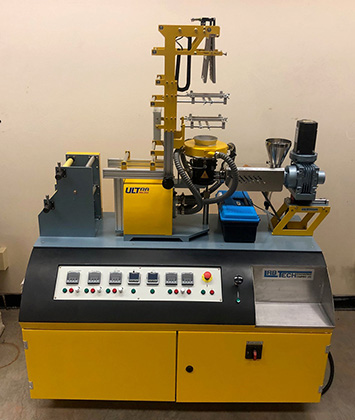
This single-line film blowing apparatus from Lab-Tech can blow films with as little as 50 g of material. The film tower has a total width of 150 mm and can accommodate a film of a lay-flat width up to 100 mm. The nip-rolls are spring-loaded and driven with a variable speed DC The film bubble is stabilized with two sets of adjustable frames which can accommodate all applicable bubble diameters. The tower is adjustable in height with a central turning wheel, and it has a height range with die to nip-roll distance from 445 to 640 mm The tower is adjustable in height with a central turning wheel, and it has a height range with die to nip-roll distance from 445 to 640 mm.
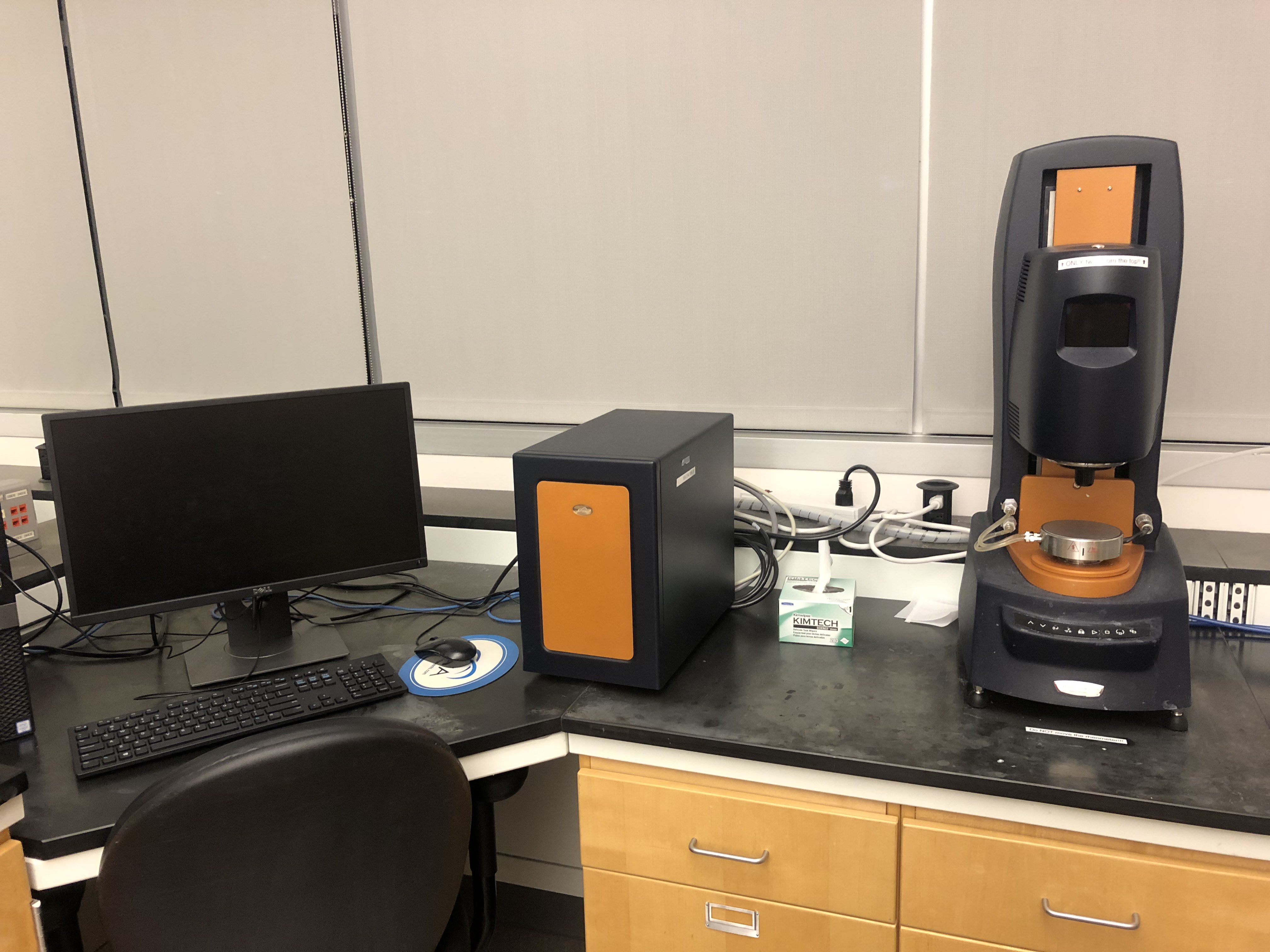
This DHR2 stress-controlled rheometer from TA Instruments is used by our group to measure the steady-shear viscosity of polymer melts below 200 Celsius and collodial solutions. The instrument uses heated plates rather than an oven, which allows for better control of the gas (i.e. measurements can be made under nitrogen to reduce the rate of polymer degradation) The shear-rate region for the former is much lower than the capillary viscometer, so we view this instrument and the capillary viscometer as complementary.
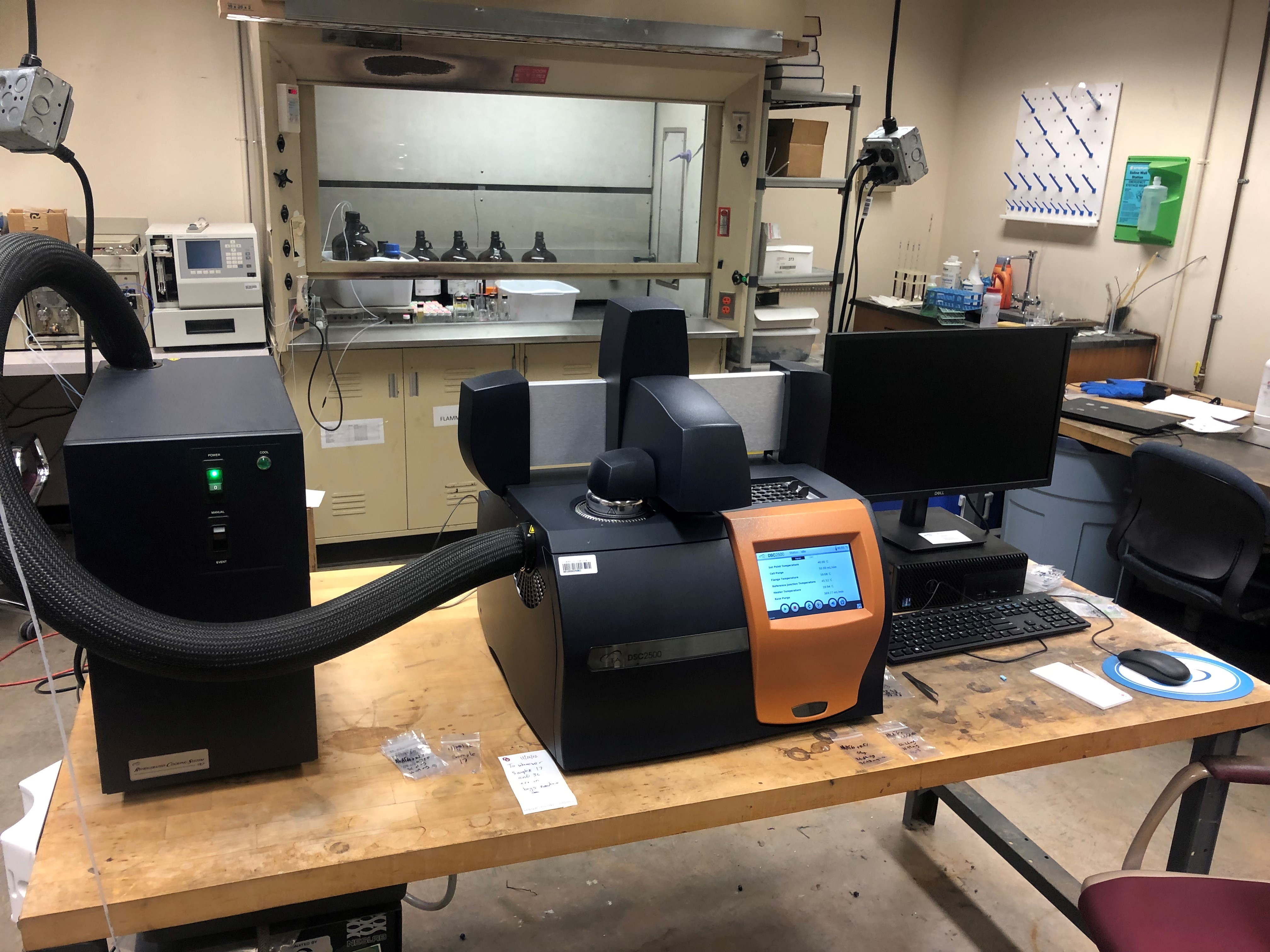
The DSC 2500 is a newer TA Instruments top-of-the-line, research grade DSC. Our Q1000 includes Advanced Modulated® DSC, a 50-position autosampler, and a Peltier cooler. The much more stable baseline vs. the Q1000 makes this our workhorse DSC unless liquid nitrogen cooling is required.
Small Angle X-ray Scattering
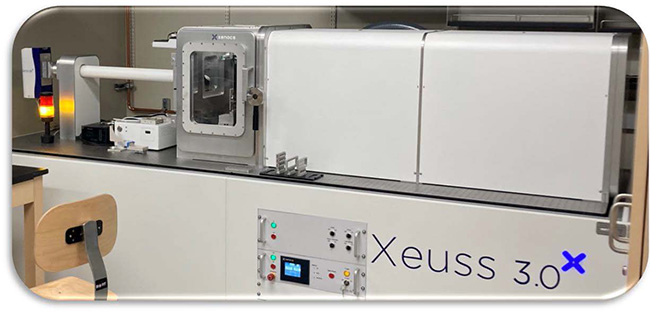
The Xeuss 3.0 (located in the laboratory of Javen Weston at the University of Tulsa) uses a microfocus CuKa source an angular range from 0.05 nm-1 to 45 degrees because of the ability of the Pilatus area detector to move closer and further away from the sample. The equipment also comes with heating and cooling as well as a flow cell.
.
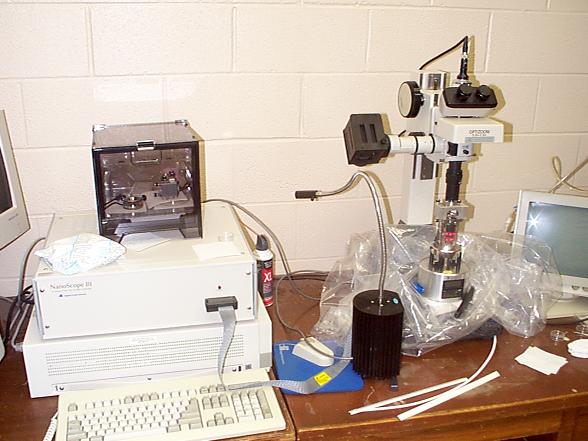
This Digital Instruments SPM is used to measure the surface topology (i.e. the shape of the surface) by running a nanometer-size probe over the surface and measuring the deflection of the probe. Think of what happens if you run your finger over concrete vs. over a car, one is smooth the other rough. Your finger goes up and down on the concrete, but smoothly glides over the car. This is what an SPM does.
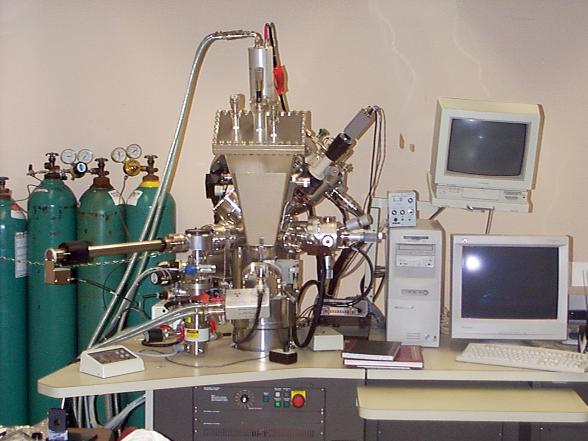
The Phi Electronics X-ray Photoelectron Spectrometer Model 5800 with variable angle resolution and cold finger is used to quantify the elemental composition of atoms at a surface. For example, we have used the XPS to determine the amount of surfactant trapped by polymer after admicellar polymerization. The variable angle capability means that we are able to vary the depth of penetration, i.e. we can be sensitive to the composition from approximately 1-10 nm away from the surface.
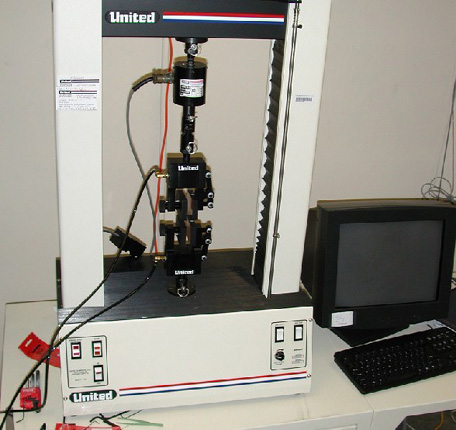
We have recently acquired a 2000 lb tester SSTM tester from United Testing Systems.We have a full range of grips and load cells for testing any kind of form a polymer can be found in, including fibers, films, dogbone bars and three-point bend. The instrument is interfaced to a computer and we can perform a wide variety of ASTM tests.
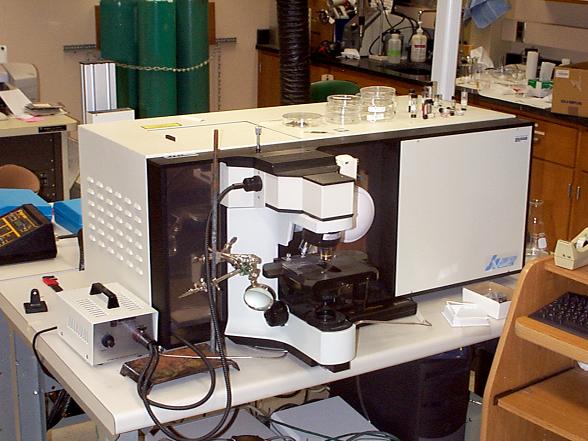
We use this instrument is used to measure Raman spectra of polymeric materials. Micron level spatial resolution is possible with the attached microscope.
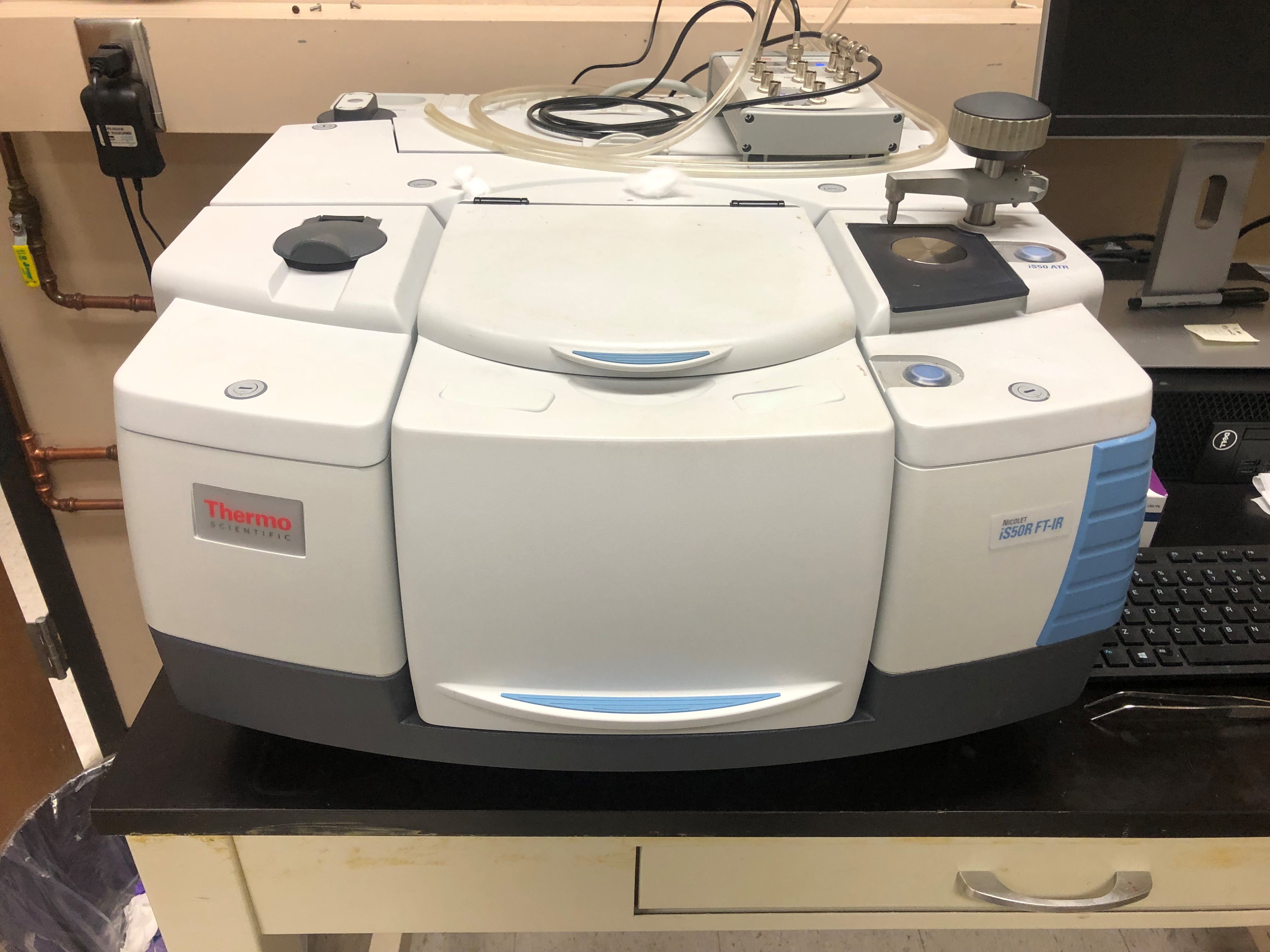
The Nicolet iS50R Fourier Transform Infrared (FTIR) Spectrophotometer is used to measure the infrared spectrum of many materials, including polymers. Geometries that we have used include transmission through salt plates, transmission of films and attenuated total reflectance of films.
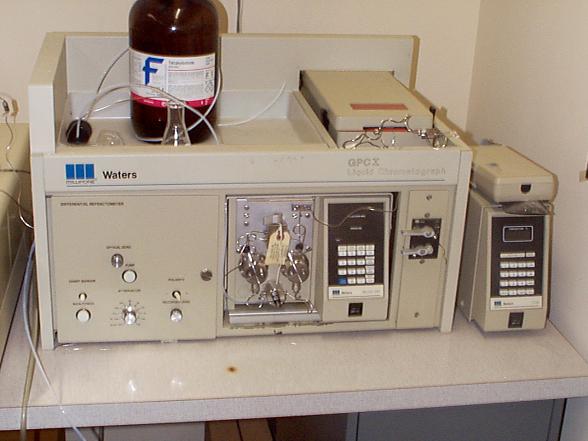
This Waters GPC I gel permeation chromatography system is used to measure the molecular weight of polymers. We have three types of detectors: a refractive index detector, a UV detector with four user-definable wavelengths and finally a flow-through light scattering detector for absolute molecular weight determination. We are able to resolve molecular weights (polystyrene standards) from 10,000-6,000,000. We have interfaced this older unit to a IBM-type personal computer. We also have a complete GPC setup (not shown) for measuring the molecular weight distibution of water-soluble polymers.
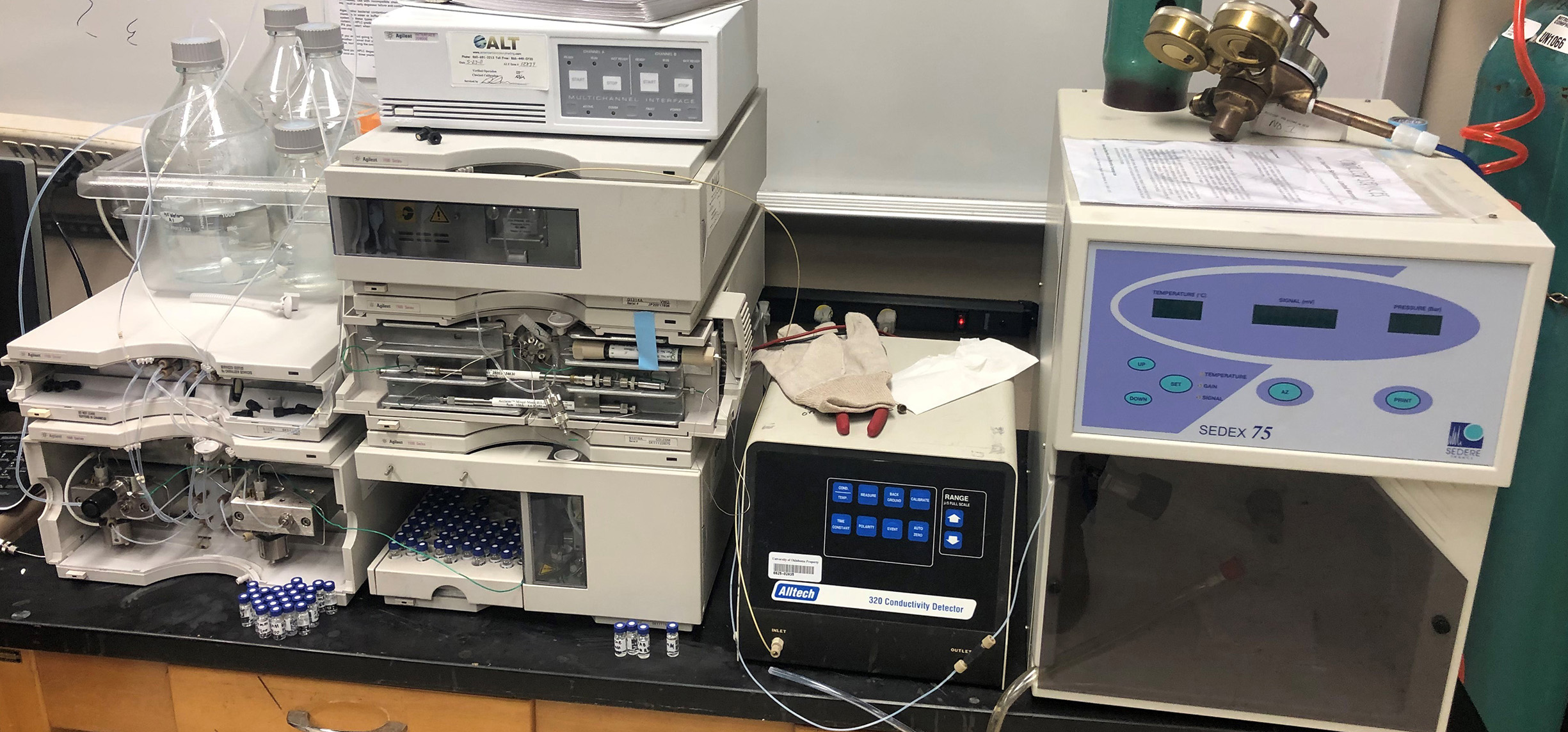
The HPLC measures the concentration of components in water. For example, we measure the amount of surfactant in water when we want to know how much surfactant adsorbs at a surface. We have a conductivity detector, a refractive index detector, a UV-absorbance detector and finally an evaporative light scattering detector.
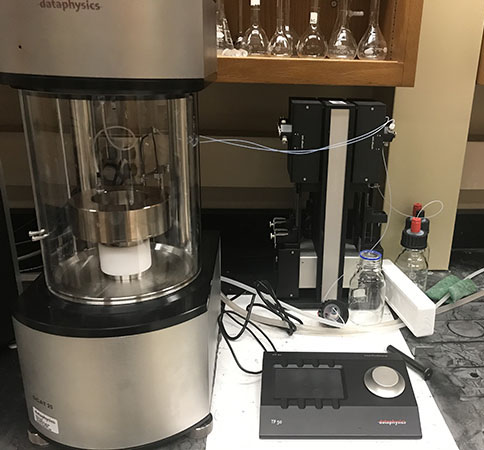
The DataPhysics DCAT 25 is typically used to measure the surface tension of a liquid.. The solid can be a fiber, plate or ring, and it is lowered or raised into the liquid, and the weight is measured very sensitively which in turn allows for the calculation of surface tension. We have four automatic dosing pumps so that the CMC of a binary mixture can be measured automatically.
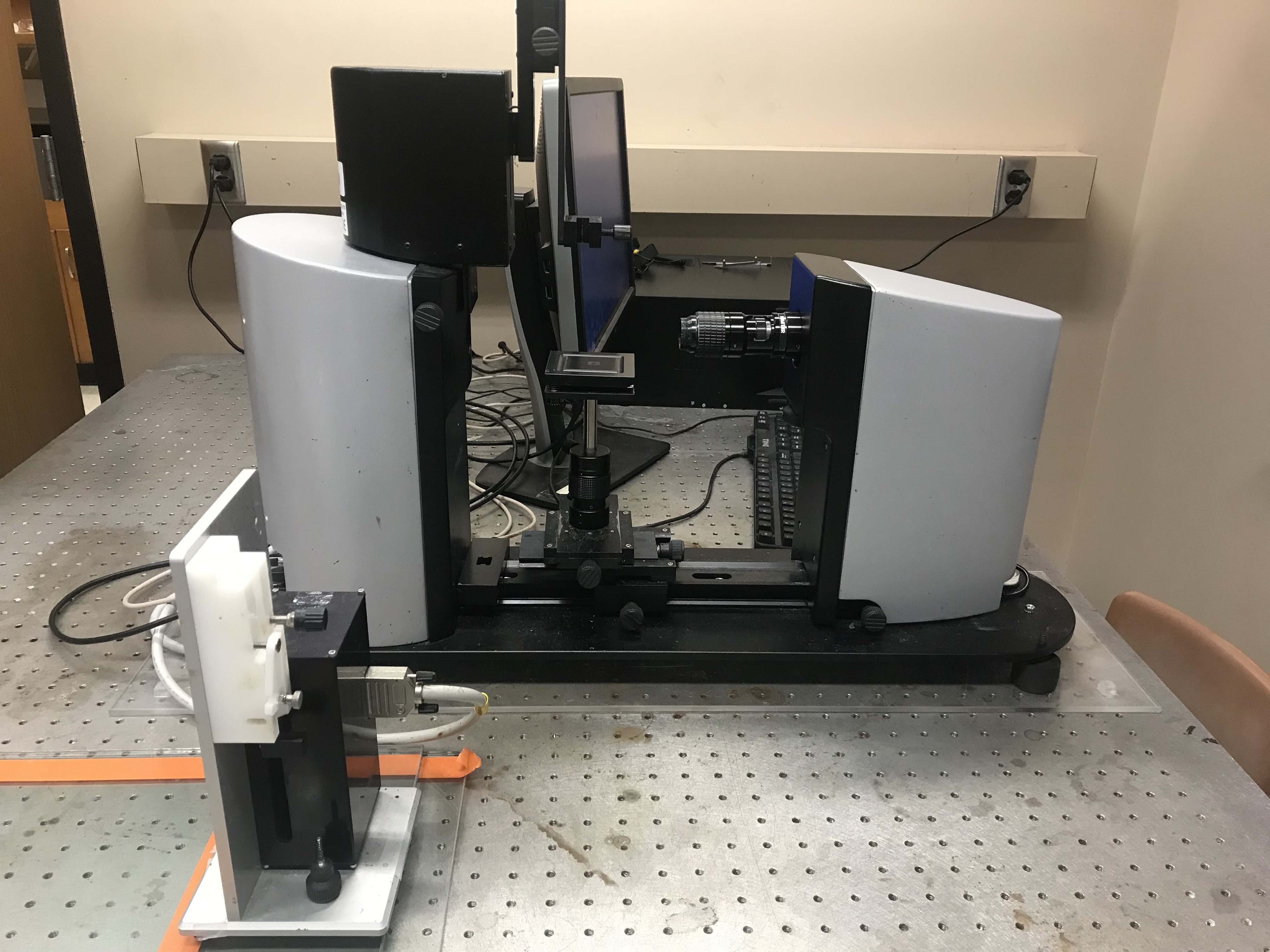
The Biolin Scientific Theta tensiometer measures the shape of a drop and converts that to surface or interfacial tension (the former if the drop is suspended in air, the latter if the drop is suspended in another liquid). This method can be used for time-resolved measurements, but the smallest time that can be measured is on the order of a few seconds.
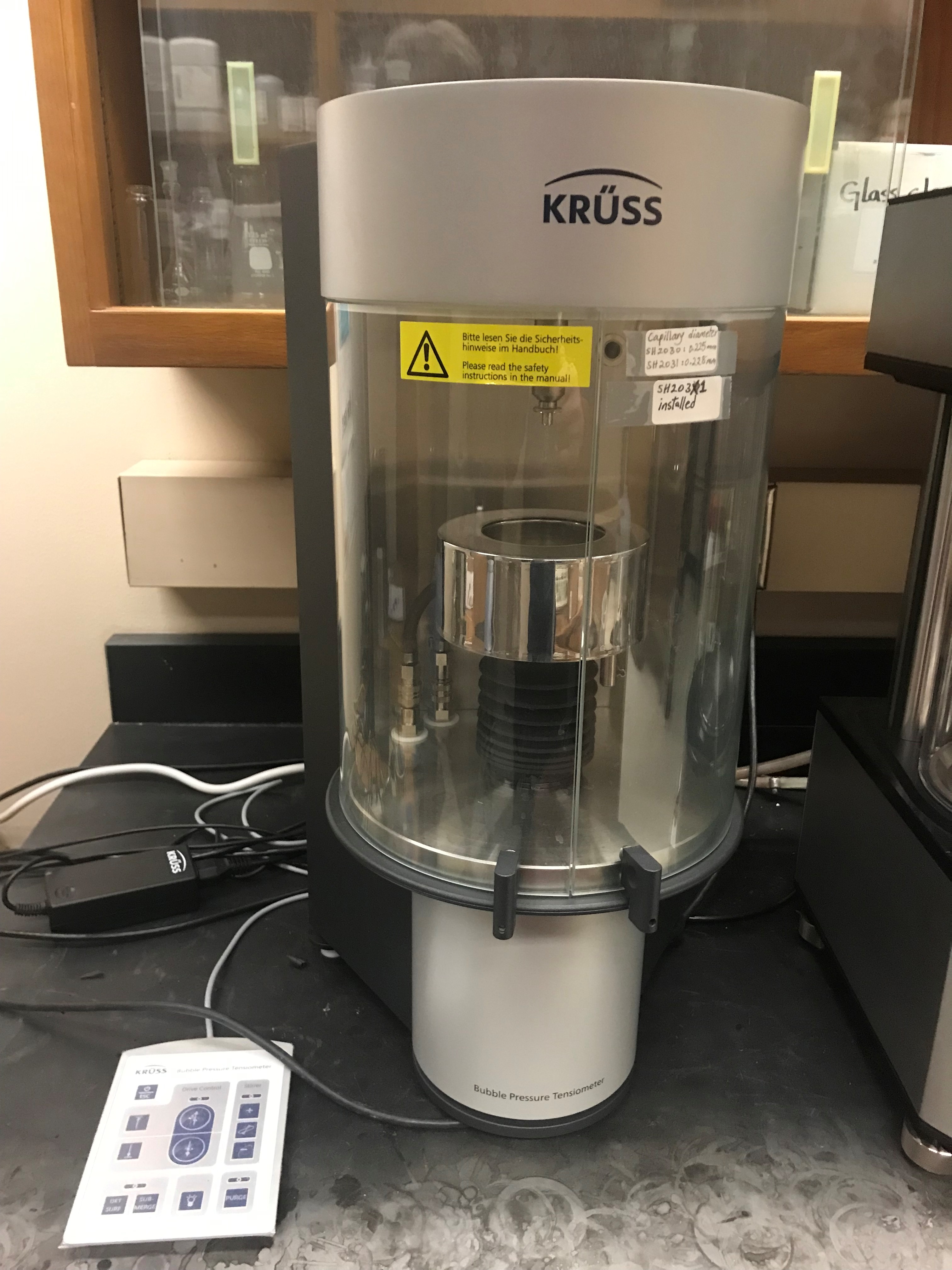
The KRÜSS BP100 bubble pressure tensiometer measures the pressure at which a bubble forms from a capillary of a given size which in term can be used to measure the surface tension of the liquid. This instrument is typically used for time resolved measurements by changing the air flow rate and can measure at times from a few milliseconds to tens of seconds and hence will overlap timescales with the drop shape analyzer
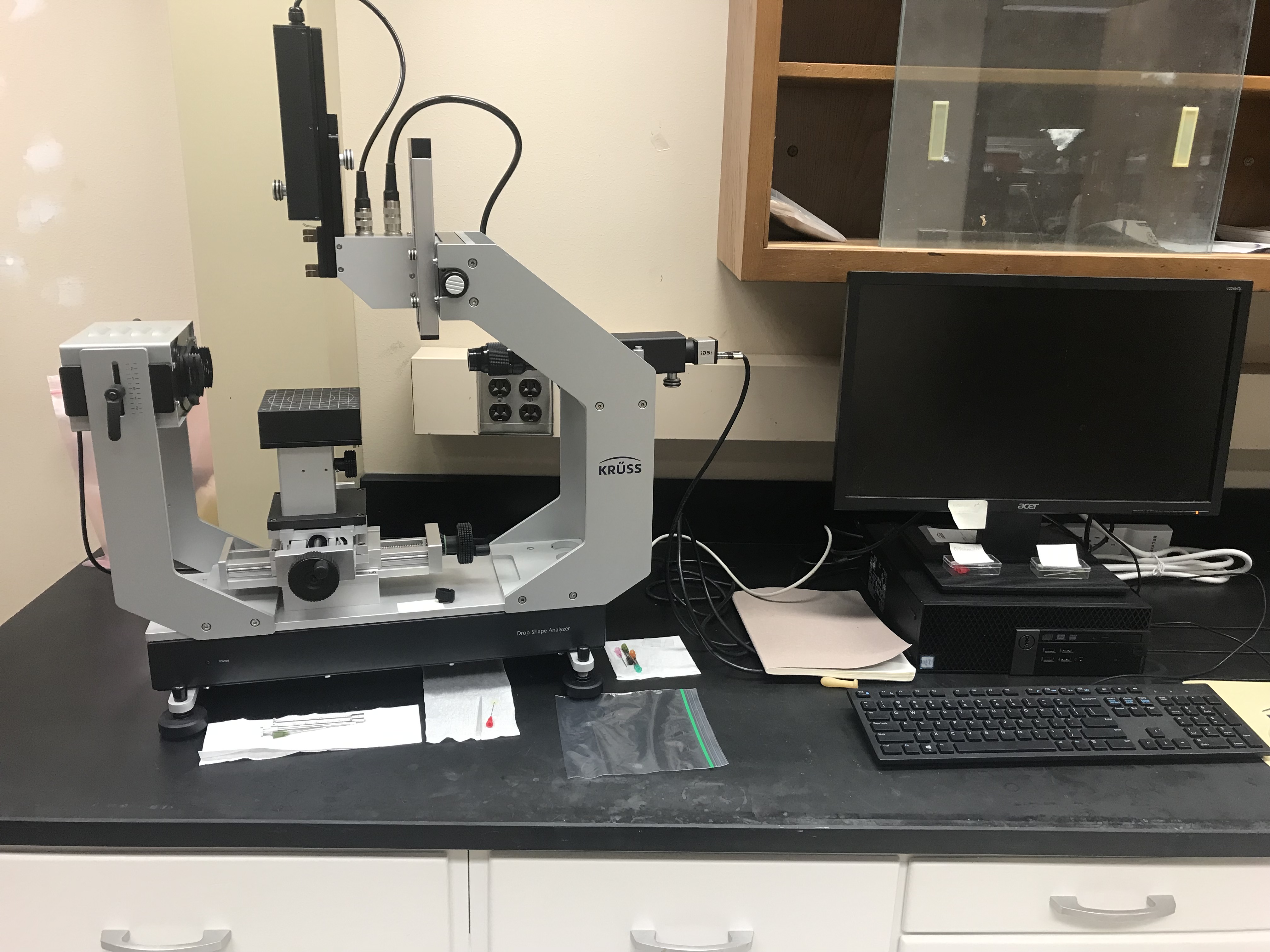
This instrument from KRÜSS is also a drop shape analyzer but is configured to measure contact angle. In this measurement, the angle betwee a liquid drop and a solid surface is measured. In addition, a syringe can add or take out liquid, i.e. the advancing or receding contact angle can be measured and hysteresis quantified.
Quartz Crystal Microbalance with Dissipation
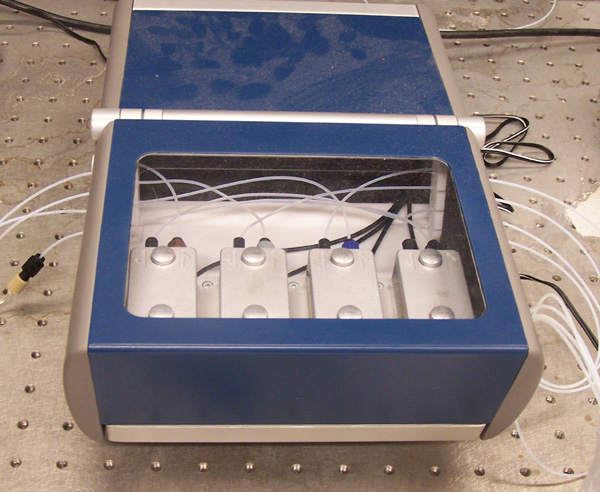
This device, purchased from QSense, uses the frequency of oscillation of a quartz crystal (which can be coated with various materials, including gold) to monitor quantitatively the mass of an adsorbed layer as well as qualitatively the rigidity of the layer. We have a flow cell that is hooked up to the system which allows us to pump in various materials.
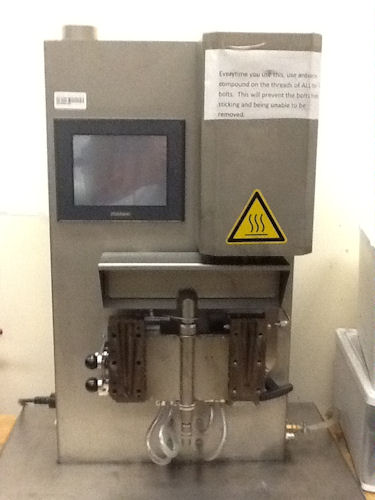
This Xplore 5 cm3 microcompounder is used to mix polymers with or without fillers. Using such a small volume allows us to work with very small amounts of material, which is especially useful for certain fillers, such as experimental grades of carbon nanotubes.
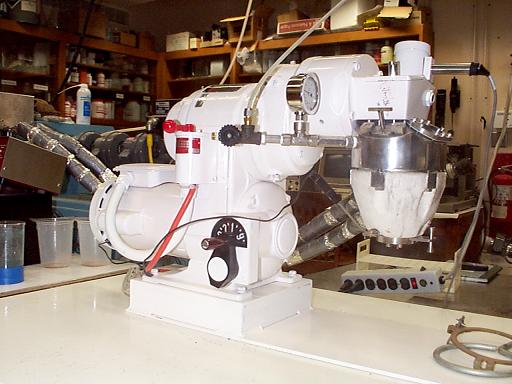
The Mixer/Extruder that we use is from Design Integrated Technology Inc. model number 2CV. The CV Model is a jacketed twin cone reactor that offers a unique mixing principle using intersecting dual helical-conical blades that intermesh throughout the conical envelope of the bowl. It is designed to mix up to 12 million cps. The CV is a low speed, medium shear style rector with excellent mix dispersement. The CV is capable of full vacuum, pressure and temperature control, top loading and bottom discharging. The CV is primarily used to mix molten polymers with inorganic fillers.
Single Screw Extruder
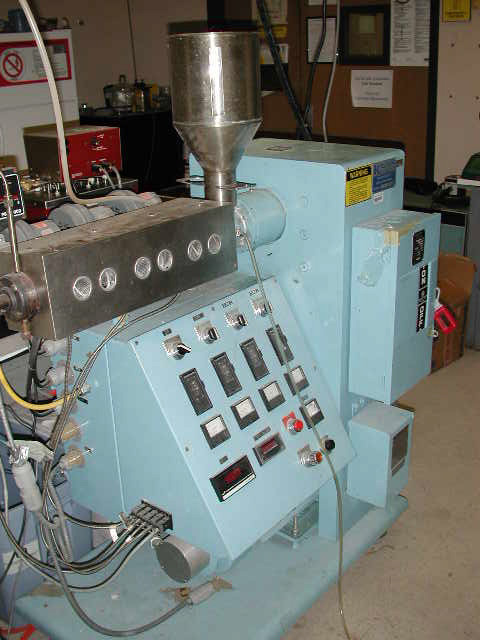
The Killion Single Screw Laboratory Extruder has a 1" screw and is ideal for pound size quantities of material. The screw is designed with a special mixing section for compounding. We have a variety of heated film dies, along with a pellet die. We have a pelletizer for chopping the polymer into pellets.
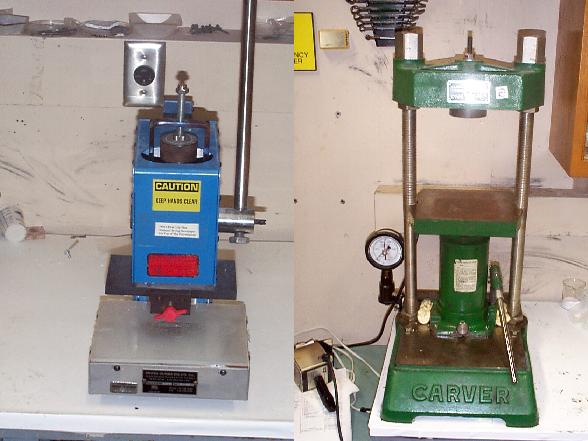
The Carver Laboratory Press (picture on right) is used to take polymer pellets and make them into flat sheets using rectangular molds. Alternatively, we can use the lab press with a cylindrical mold and make a disk. We can then take these disks or sheets and, using the Dewes-Gumbs die cutter (picture on left), we can cut samples for dynamic mechanical analysis, tensile testing etc
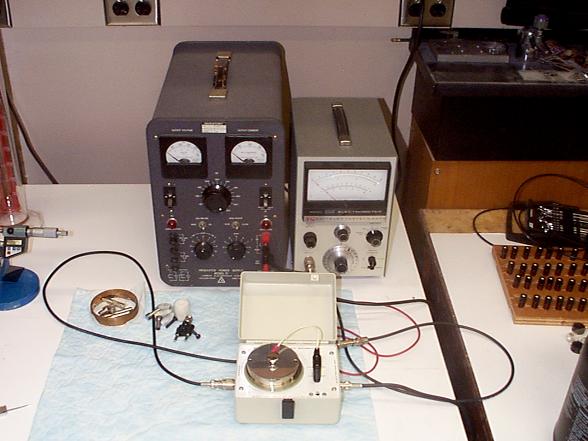
This Keithley Model 6105 resistivity chamber, along with the associated voltage generators and current measuring devices, is used to measure conductivity of polymer composites. This cell is especially designed and shielded for low conductivity materials, and we can measure both bulk conductivity and surface conductivity. We also have home-built an apparatus (not shown) that allows us to reproducibly measure the conductivity of particulate fillers.
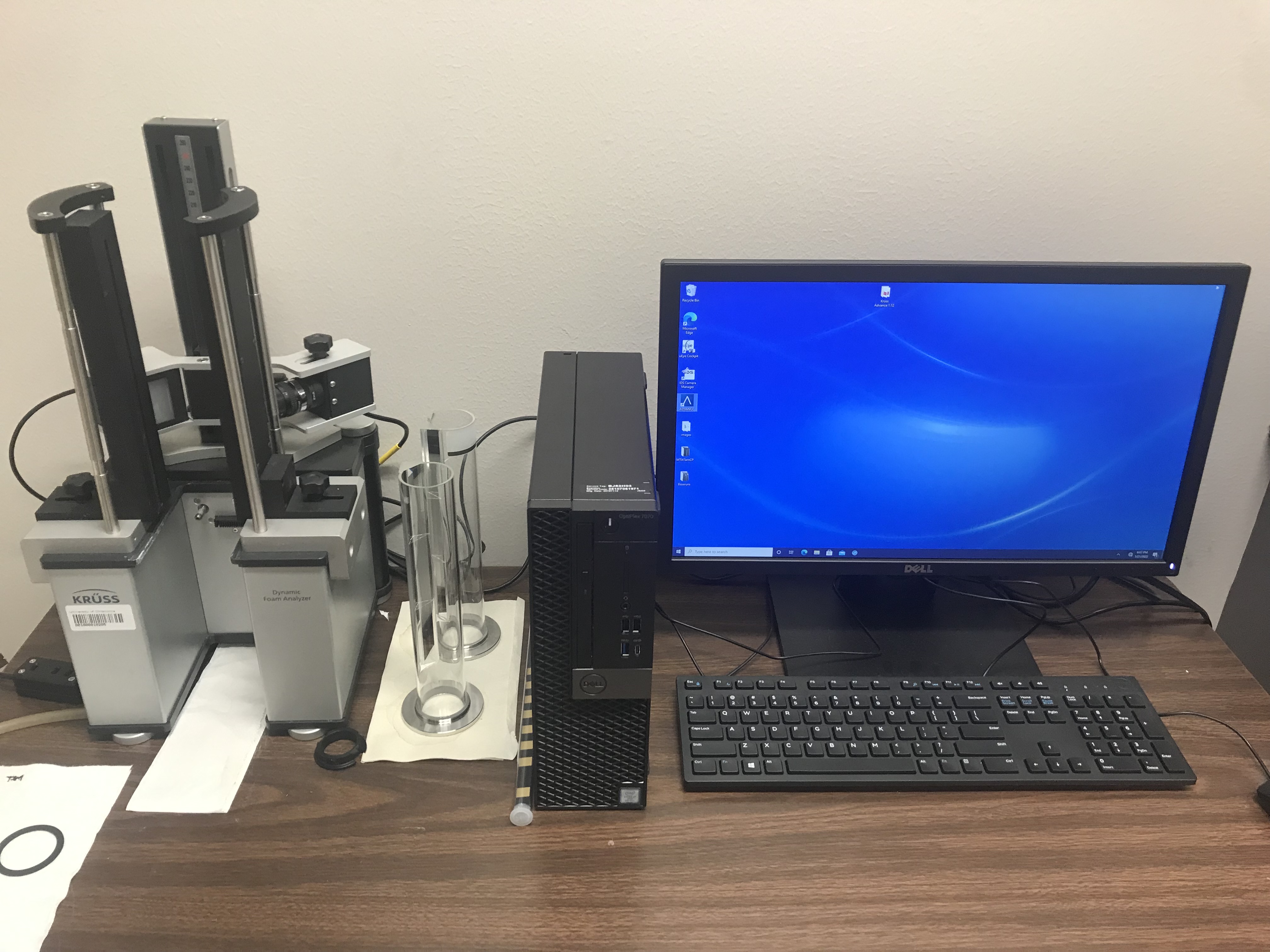
This Kruss DFA100 dynamic foam analyzer cause a foam with air or other gas, and then measures the bubble size distribution with time, the volume of foam and the liquid content.
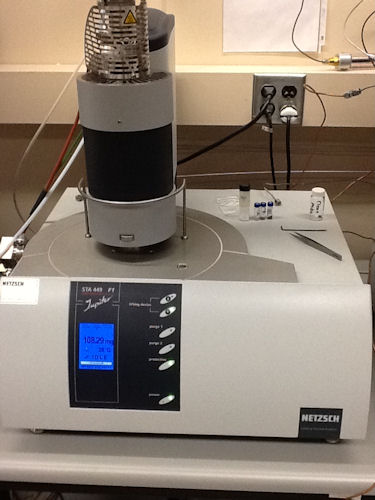
This instrument, an STA 449 F1 Jupiter from Netzsch Instruments measures the weight change of a sample as a function of temperature at a user-defined heating rate in a user-defined atmosphere. This instrument also has the capability of measuring a DSC signal, but generally we use the DSC described earlier on this page because of its increased sensitivity.
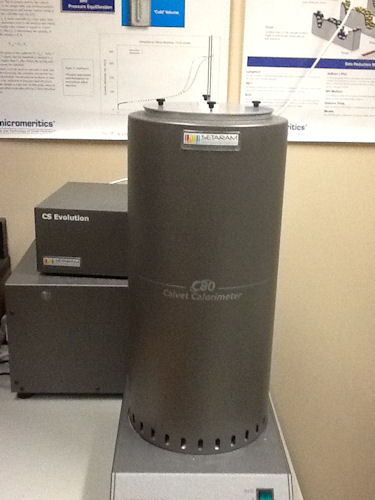
This Calvet-style calorimeter, a Setaram C-80, is used to measure the heat of adsorption of various surfactants onto various surfaces at various temperatures and pressures. We have found heat of wetting as a very effective way to characterize wetting characteristics.